
Endangered Species Hui 2026
Programme and Speakers
2nd and 3rd September | The Atrium, Wintec, Kirikiriroa | Hamilton
This two-day national hui brings together iwi, communities, scientists, creatives and advocates to connect, collaborate and act on our shared responsibilities to te taiao. It is a practical, action-focused space to share what’s working, explore new innovations, and build momentum for collective impact.
MC NORM HILL
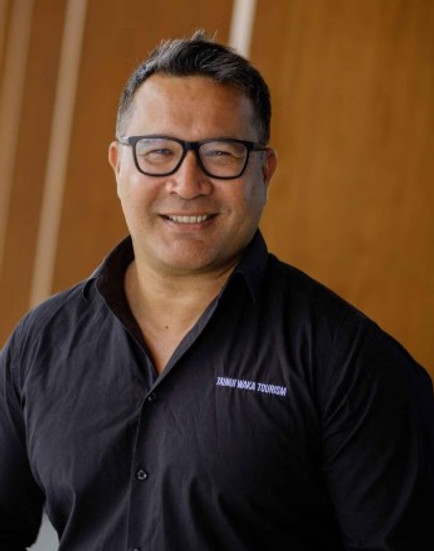
Norm Hill is a respected Waikato community leader, cultural and environmental specialist, and champion for the Waikato River. As founder of the Waikato Kaitiaki River Sweepers, Norm inspires volunteers to restore the awa through hands-on action, removing tonnes of rubbish.
Hui MC and Facilitator
Norm Hill is a respected Waikato community leader, cultural and environmental specialist, and passionate champion for the Waikato River.As founder of the Waikato Kaitiaki River Sweepers, he inspires volunteers to take practical action for the environment, bringing people together to remove tonnes of rubbish from waterways while strengthening community connections and stewardship.
Grounded in te ao Māori and driven by a deep commitment to kaitiakitanga, Norm believes lasting change comes from empowering people to care for the places they call home. He has built strong partnerships across iwi, community groups, businesses, councils, and volunteers, demonstrating the power of collective action to restore the health and mauri of our waterways.
A talented guitarist, creative storyteller and connector, Norm's warmth, humour, and authenticity makes him the ideal MC for the Endangered Species Hui.
Norm Hill
Tainui
KEY NOTE SPEAKER

Tawera Nikau’s life is a story of resilience and purpose. After a standout international rugby league career, Tawera has turned his competitive drive toward strengthening community and te taiao.
Journey From League Warrior to Champion for Te Taiao
Tawera Nikau’s life is a story of resilience, leadership, and purpose. After a standout international rugby league career, including captaining the NZ Māori team and being inducted into the New Zealand Legends of League, Tawera turned his drive toward strengthening community and restoring te taiao.
Overcoming personal adversity, including losing a leg and profound family tragedy, he rebuilt his life with clarity of purpose and commitment to others. Today he channels that strength into Māori-led environmental action, mental health advocacy, and regenerative land stewardship rooted in mātauranga Māori.
On his whānau farm beside Lake Waikare, Tawera works with scientists, iwi, schools, and community groups to restore waterways, plant native ecosystems, and protect threatened species. He also champions national campaigns, from opposing sand-mining at Te Akau Bream Bay to advocating for clean water and biodiversity. Tawera’s message is rooted in connection to whenua, people, and future generations.
Tāwera Nikau
Tainui
KANAKANA REVIVAL

Riki Parata will share the journey of the Hokonui Rūnanga, who are leading vital restoration work in Southland for the kanakana / piharau / lamprey, which have been in our rivers for over 360 million years.
An ancient, tāonga species
Kanakana Revival: Weaving Whakapapa, Science, and Community
Kanakana, a jawless, boneless, and ancient species, have been in Aotearoa’s rivers for over 360 million years, long before the dinosaurs. As juveniles they filter-feed to cleanse streams, and as adults they migrate thousands of kilometres between river and sea, reflecting the health of our waterways.
Kanakana are a taonga species and mahinga kai, deeply tied to iwi, tikanga, and whakapapa. Their epic upstream journeys to spawn, sometimes over 100 km, are threatened by pollution events, dams and culverts.
Riki Parata will share the journey of the Hokonui Rūnanga, who are leading vital restoration work in Southland, incorporating mātauranga Māori and science through surveys, riparian planting, and innovative breeding programmes.
Riki Parata
Hokonui Rūnanga
EELUSIVE
TUNA

Siobhan Nuri shares findings from field-based research focused on how tuna return from their ocean spawning grounds as glass eels and transition into freshwater ecosystems.
The mysterious lives of tuna - eels
The Mysterious Lives of Eelusive Tuna
Siobhan Nuri is a freshwater fisheries scientist and PhD candidate at the University of Waikato. Her research addresses a critical gap in understanding the early life stages of longfin and shortfin tuna, taonga species of deep cultural, ecological, and environmental importance in Aotearoa.
In her presentation on the elusive lives of tuna, Siobhan shares findings from field-based research focused on how tuna return from their ocean spawning grounds as glass eels and transition into freshwater ecosystems. Working at river mouths and key catchments, her work seeks to better understand migration timing, pathways, and the environmental drivers shaping tuna survival.
Her research brings together scientific methods and mātauranga Māori, grounded in collaboration with iwi and local communities.
Siobhan Nuri
Ngāti Ranginui, Ngāti Tarāwhai, Ngāti Korokī Kahukura, Te Whakatōhea
BECOMING BAT WOMAN

Te Ataahua Richmond is a passionate kaitiaki deeply connected to tikanga and the taiao, with hands-on experience in restoration mahi and the protection of pekapeka (native bats) in North Waikato.
Pekapeka | Bat Restoration
Te Ataahua Richmond is a passionate kaitiaki deeply connected to tikanga and the taiao, with hands-on experience in restoration mahi and the protection of pekapeka (native bats) in North Waikato, particularly around Lake Waikare. Grounded in kaupapa Māori and community-led action, her work spans monitoring, habitat restoration, education, and whānau engagement, supporting one of Aotearoa’s most threatened taonga species.
Since 2015, Te Ataahua has contributed to major projects including the Huntly Bypass, Sleepyhead development in Ōhinewai, Transpower, and the Contact Energy wind farm at Hāpuakohe. In each role, she has worked to protect taonga species, safeguard cultural values, and ensure development aligns with iwi perspectives and environmental protocols.
Te Ataahua demonstrates what it takes to restore pekapeka populations on the ground, sharing the challenges, the learnings, and how we can reconnect people and place.
Te Ataahua Richmond
Tainui, Te Whānau a Apanui, Ngāti Maniapoto
LISTENING TO THE TAIAO

Miranda Wells alongside Haki Keogh from Ngāti Maru, will share how Hark acoustic monitoring technology is being developed with communities to monitor and serve ecological and cultural priorities.
Technology and Mātauranga
Hark is an emerging acoustic monitoring technology designed to support Aotearoa’s conservation and restoration efforts by helping us better understand and protect threatened species. In this presentation, Miranda Wells (Project Lead, Hark / 800 Trust), alongside Haki Keogh from Ngāti Maru, will share how Hark is being developed in partnership with communities to serve both ecological and cultural priorities.
The session will explore how acoustic monitoring can be tailored to the needs of threatened species programmes, and how future developments — including AI-enabled sensors — could expand Hark’s capability to detect pest species and other environmental indicators. Grounded in collaboration with iwi and conservation practitioners, the kōrero will focus on practical application, co-design, and how innovation can strengthen outcomes on the ground.
Attendees will gain insight into where Hark is heading, how it can support frontline conservation mahi, and how technology and mātauranga Māori can work together.
Miranda Wells, Haki Keogh
Hark | Ngāti Maru
REVIVAL OF ANCIENT SPECIES

Dean has been described as a ‘Living Lorax’ and will be inspiring us with tales of tall forest habitats, discovery of new, rare species and how ancient trees become upward caves in native forests.
When life returns to the forest
Revival of Ancient Species – When Life Returns to the Forest
Dean has been described as a ‘Living Lorax’ and will be inspiring us with tales of tall forest habitats, discovery of new rare species and how ancient trees become upward caves in native forests.
He represents Forest & Bird across Te Taitokerau and is on the governance group of Ka Waiataia Maungataniwha, a 7,000 hectare native forest restoration project, home of endangered pekapeka, an endemic gecko and where new species have just been found.
At this fascinating kōrero, Dean will explore “Lazarus species” — species that were widespread before human arrival, but have faced such sustained attack that they have disappeared from view. With ongoing pest control, or in areas that become predator-free, these species can begin to slowly increase in number until they are seen again.
Dean Baigent-Mercer
Forest & Bird - Te Taitokerau
MĀUI DOLPHIN KAITIAKITANGA

This session brings together tāngata whenua leadership, educators, rangatahi voice, and data expertise to share a how we can protect one of Aotearoa’s most endangered taonga species.
Action for Endangered Tāonga
This session brings together tāngata whenua leadership, educators and rangatahi voice to share real-world stories and the need to protect one of Aotearoa’s most endangered taonga species.
Led by Davis Apiti of Ngāti Te Wehi, this presentation explores decades of advocacy, community leadership, and partnership with science, including collaboration with world-renowned marine researcher Professor Liz Slooten, who helped bring global attention to the crisis facing Māui dolphins.
Education and intergenerational action are central to this kaupapa. Aotea Apiti, Chair of Moana Rāhui o Aotea and Head of Department Māori at Hamilton Girls' High School, speaks to mobilising young people to step into kaitiakitanga Dr Paul Brown is a data sovereignty specialist adding a valuable lens to the kōrero, particularly around mātauranga Māori, data, and protection of taonga.
Apiti Whānau
Ngāti Te Wehi
ENDING SEABED MINING

Phil McCabe is a leading voice in the movement to stop seabed mining around Aotearoa, working with Kiwis Against Seabed Mining (KASM) to push for a nationwide ban.
Protecting Our Seas
Protecting Our Seas: Ending Seabed Mining in Aotearoa
Phil McCabe is a leading voice in the movement to stop seabed mining, working with KASM (Kiwis Against Seabed Mining) to push for a nationwide ban. Based in Whaingaroa, Raglan he brings attention to the rich diversity of marine life found along the west coast and the risks industrial extraction poses for our whole country.
Phil will outline the 21-year journey from KASM's inception in 2005, when seabed mining was first placed on the agenda and subsequently pushed by successive governments.
He will also focus on the many positive outcomes that have arisen from the committed, consistent and enduring engagement on the issue from Tangata Whenua, KASM, and communities.
Phil McCabe
Kiwis Against Seabed Mining
HĀPORI MOBILISATION

Mike Smith is a prominent climate activist and community leader who has played a central role in mobilising hāpori across Aotearoa to oppose offshore oil and gas prospecting.
Opposing Oil Prospecting
How hāpori mobilised to oppose oil prospecting across Aotearoa and what’s happening now.
Mike Smith (Ngāpuhi and Ngāti Kahu) is one of Aotearoa's most prominent Māori climate advocates. He led the iwi-based legal challenge against the Crown for permitting new oil exploration — a case that showed how local resistance, strategic organising, and tikanga-based leadership can shift national conversations.
Mike continues to support communities to defend their moana and whenua, strengthen climate justice movements, and prepare for the next phase of environmental challenges.
At the Endangered Species National Hui 2026, he shares lessons along the way, what's happening now and how communities can better prepare for the climate events that are coming.
Mike Smith
Ngāpuhi and Ngāti Kahu
TE AO RANGATAHI
.jpg)
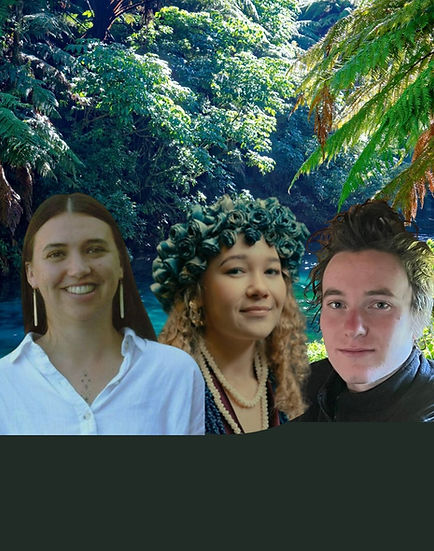
What does a thriving future for people and biodiversity look like through the eyes of rangatahi? What if young people were leading the decisions? How can we empower more rangatahi to participate in the future of our whenua, awa, moana and all living things?
World Through a Rangatahi Lens
Te Ao Rangatahi | The World Through a Rangatahi Lens,
What does a thriving future for people and biodiversity look like through the eyes of rangatahi?
This panel explores the hopes, ideas and leadership of the next generation. Together we'll discuss what it would mean if young people were leading the decisions, how we can empower more rangatahi to participate in democracy, and the future they want to create for our whenua, awa, moana and all living things.
Driven by lived experience, creativity and action, this kōrero gives a voice to the young people helping shape a future where nature and communities can thrive.
Tessa Thomson, Rosalie Norton, Jonny MacKenzie
Rangatahi Panel
KĀKANO TO KOROWAI

Rangitahi Wharepapa (Te Whānau a Apanui) and Emma Giesen (Trees That Count) will share the inspiring East Coast initiative that has reconnected communities with the whenua.
Growing Stronger Communities
Kākano to Korowai: Growing Stronger Communities Through Native Tree Planting
Rangitahi Wharepapa (Te Whānau a Apanui) and Emma Giesen (Trees That Count) will share the inspiring East Coast initiative that has reconnected communities with the whenua. The project follows the journey of a kākano (seed) through its stages of growth, culminating in healthier native ecosystems around homes, kura and marae.
Native trees now flourish on marae, attracting more manu to sing and swoop during whaikorero on the paepae. Community members are planting trees at their own homes, while ongoing wānanga bring knowledge back to the whenua and support tree planting in schools with tamariki. This initiative has created lasting connections, nurturing both people and the environment.
Since its launch, Trees That Count has supported over 1,800 planting projects and enabled the planting of over 2.8 million native trees.
Rangitahi Wharepapa, Emma Giesen
Te Whānau a Apanui | Trees That Count
STOPPING SANDMINING

Olivia Haddon and Jessie Stanley share the multi-generational fight and community-led environmental action across Pakiri and Mangawhai to stop sandmining and safeguard coastal ecosystems.
Protecting Pakiri + Mangawhai
The multi-generational fight to stop sandmining at Pakiri and Mangawhai
Olivia Haddon (Te Whānau o Pakiri) and Jessie Stanley (Save Our Sands Mangawhai Pakiri) present the story of community-led environmental protection across Pakiri and Mangawhai, sharing the multi-generational fight to stop sandmining and safeguard the fragile coastal ecosystems that are home to the tara iti.
Grounded in intergenerational whānau knowledge, lived experience, and grassroots action, this presentation traces how whānau, hapū, and community groups mobilised to defend this coastline, combining mātauranga Māori, science, advocacy, and legal challenges.
The challenges and successes are shared and together, they will talk about lessons learned and what it takes for communities to stand strong to protect the places they love.
Olivia Haddon, Jessie Stanley
Te Whānau o Pakiri | Save Our Sands
RESTORING CONNECTION
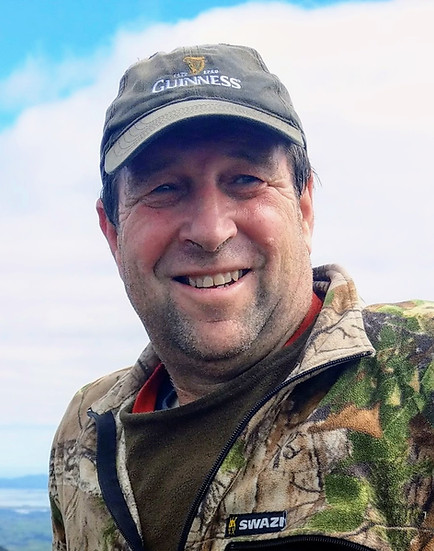
Kōkako and pekapeka-tou-roa are two of our most treasured threatened species. While they occupy different ecological niches, together they reveal an important truth: everything is connected.
Kōkako + Pekapeka-tou-roa
Kōkako, Pekapeka-tou-roa, and Restoring Connection
Kōkako depend on healthy, mature forests, where complex relationships between trees, epiphytes, insects, fungi, and birds have evolved. Pekapeka-tou-roa move more freely across landscapes, connecting forests, wetlands, farmland, and urban edges as they forage and roost. Together, they remind us that thriving ecosystems rely on connection between species, waterways, landscapes, and people.
Drawing on 35 years as an ecologist, Gerry reflects on working at the intersection of conservation and the Resource Management Act (RMA), where ecological values often need to be defended and translated into planning decisions. Through stories from both the field and the planning table, he explores how protecting taonga species is about far more than preventing extinction. It is about restoring the ecological relationships that sustain life, strengthening the connections between people and whenua.
Gerry Kessels
Ecologist
LOVE BITTERN PROJECT

Wendy Ambury shares the Love Bittern Project’s work which aims to bring Matuku-hūrepo (bittern) back from the brink and how community connection and technology can educate, mobilise, and empower.
Saving Matuku-hūrepo
Connecting People, Place and Technology to Save Matuku-hūrepo
Wendy Ambury shares the Love Bittern Project’s work to bring Matuku-hūrepo (bittern) back from the brink of extinction. This keynote explores how connection to place, strong community engagement, and smart use of technology can educate, mobilise, and empower people to take action.
Wendy will highlight how tools are being used to protect and rebuild wetland habitats, and why urgent action is needed now.
“At the current rate of population decline, we are the last generation of people who can help save Matuku-hūrepo, in their natural wetland homes”, says Wendy.
This session focuses on what meaningful, on-the-ground action looks like, and how everyone can be part of it.
Wendy Ambury
Love Bittern Project
ENHANCING MĀURI

In this interactive workshop, Michaela will guide us in exploring how art, connection, and creativity can strengthen our connection to each other and the natural world.
Interactive Workshop
Workshop: Enhancing and Strengthening Māuri
Michaela Insley (Te Whānau a Apanui, Ngāti Porou, Te Whakatōhea) is the wāhine Māori equivalent of a David Attenborough - out in nature, engaged, documenting, and sharing her love of te taiao. A storyteller and photographer, Michaela brings mātauranga to life, connecting people to the natural world.
In this interactive workshop, Michaela will guide us in exploring how art, performance, and creativity can strengthen our connection to each other and the natural world. Together, we will:
-
Understand what māuri is and why it matters.
-
Explore ways to enhance māuri for people and place.
-
Define how we can stay connected and take practical steps forward.
Bring your positive vibes, curiosity and creativity. This is a space to learn, share, and be inspired.


